Security Insights & Guides
Cut through vulnerability noise. Practical guides for dev teams who ship.
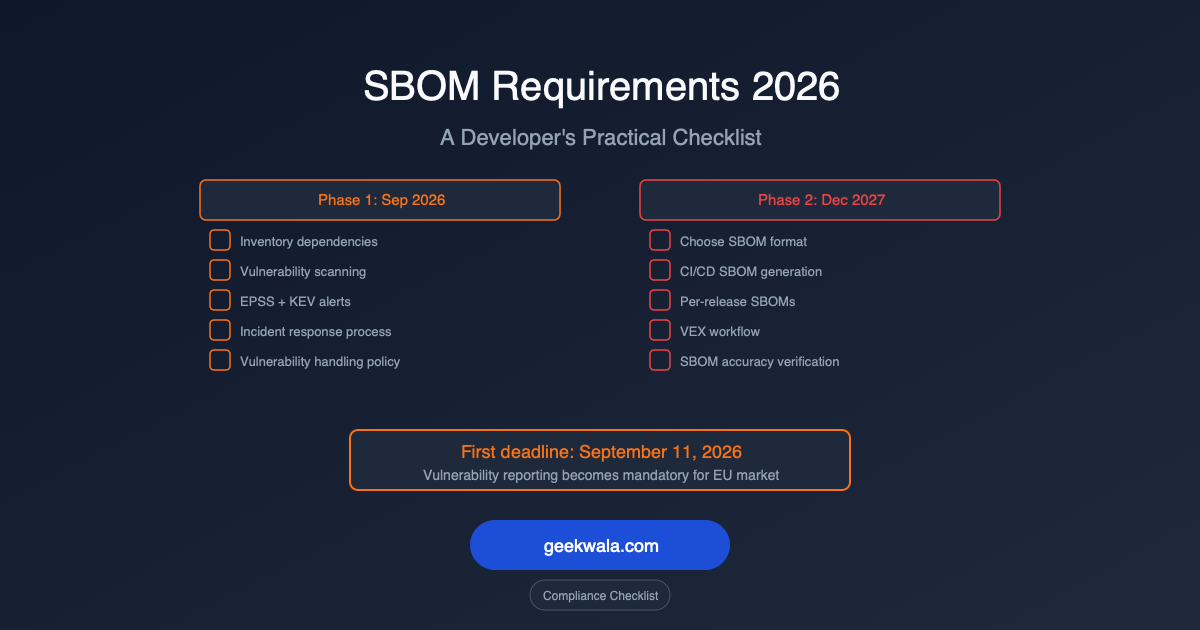
SBOM Requirements 2026: Developer Checklist
EU CRA vulnerability reporting has applied since September 11, 2026. Here's the checklist your team needs to comply — organized into two phases with specific action items for each.
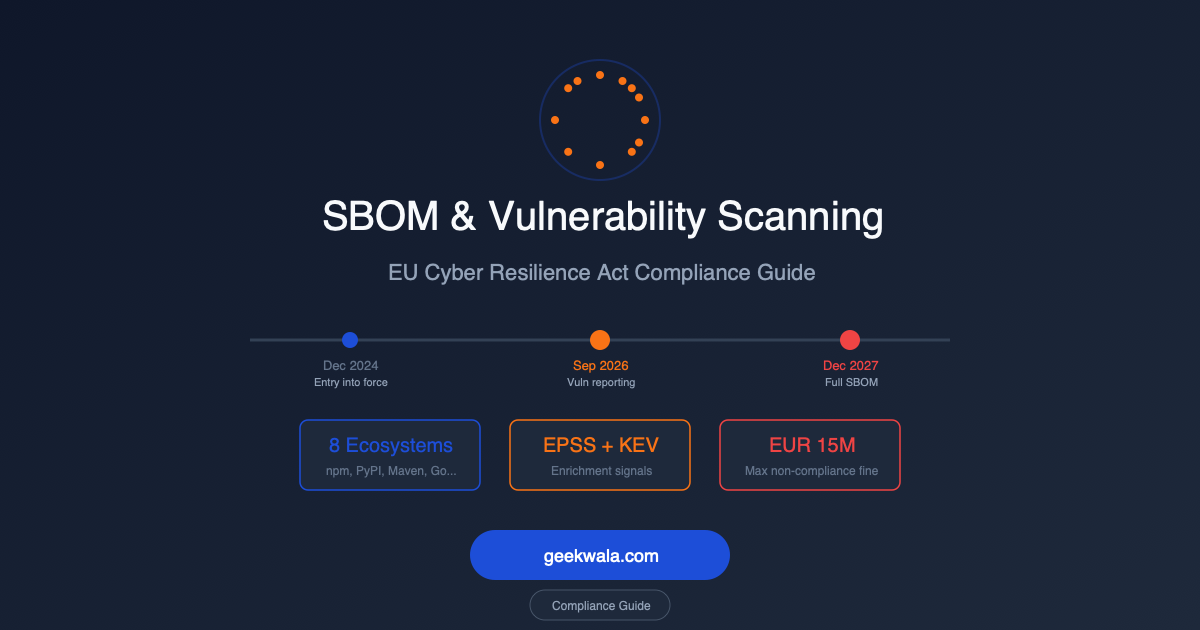
SBOM Scanning and the EU Cyber Resilience Act
Starting September 2026, the EU Cyber Resilience Act requires vulnerability and incident reporting for software sold in Europe. By December 2027, you'll need a machine-readable Software Bill of Materials. If your software has open-source dependencies — and it does — this directly affects you.
CVSS, EPSS, KEV, SSVC, and LEV Compared
Five vulnerability scoring systems compete for developer attention: CVSS, EPSS, CISA KEV, SSVC, and LEV. Each answers a different question about risk. This guide compares all five — what they measure, who maintains them, and how to combine the right signals for your team.
Ruby Dependency Security Beyond bundler-audit
bundler-audit checks ruby-advisory-db and stops there. It won't tell you which gem vulnerabilities are actually being exploited. Learn how EPSS and CISA KEV signals change Ruby dependency prioritization for production Rails apps.
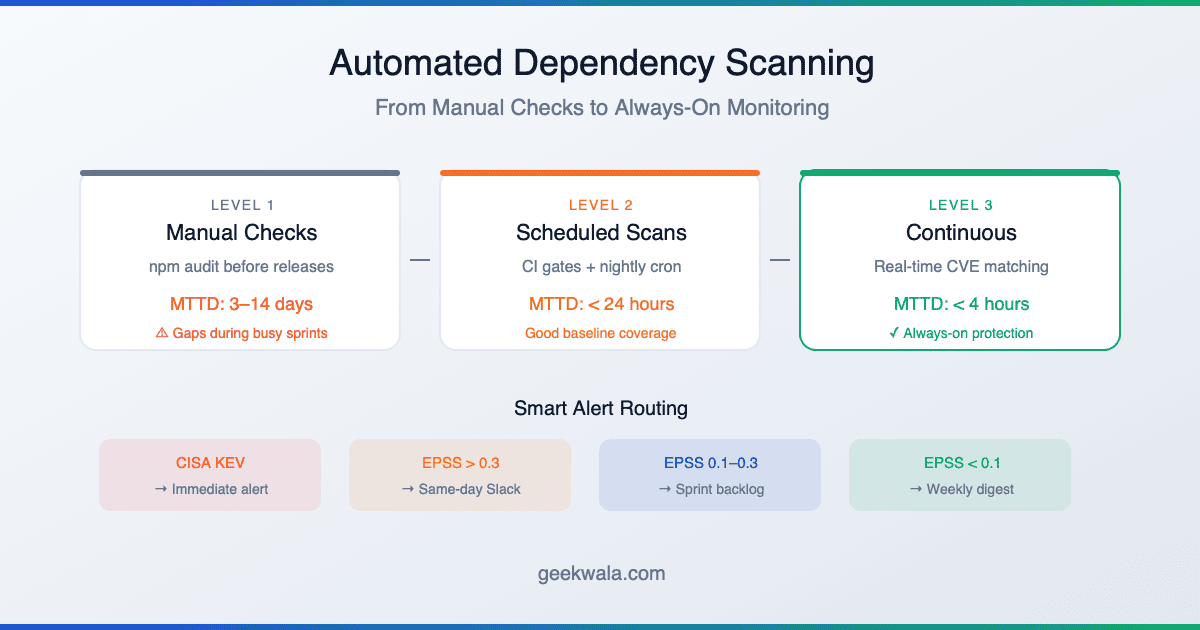
Automated Dependency Scanning: How It Works
A CVE drops Tuesday, your scan runs Friday. Three days of exposure. Learn how to set up automated dependency scanning with scheduled scans, smart alert routing via EPSS, and webhook notifications when each scan completes.
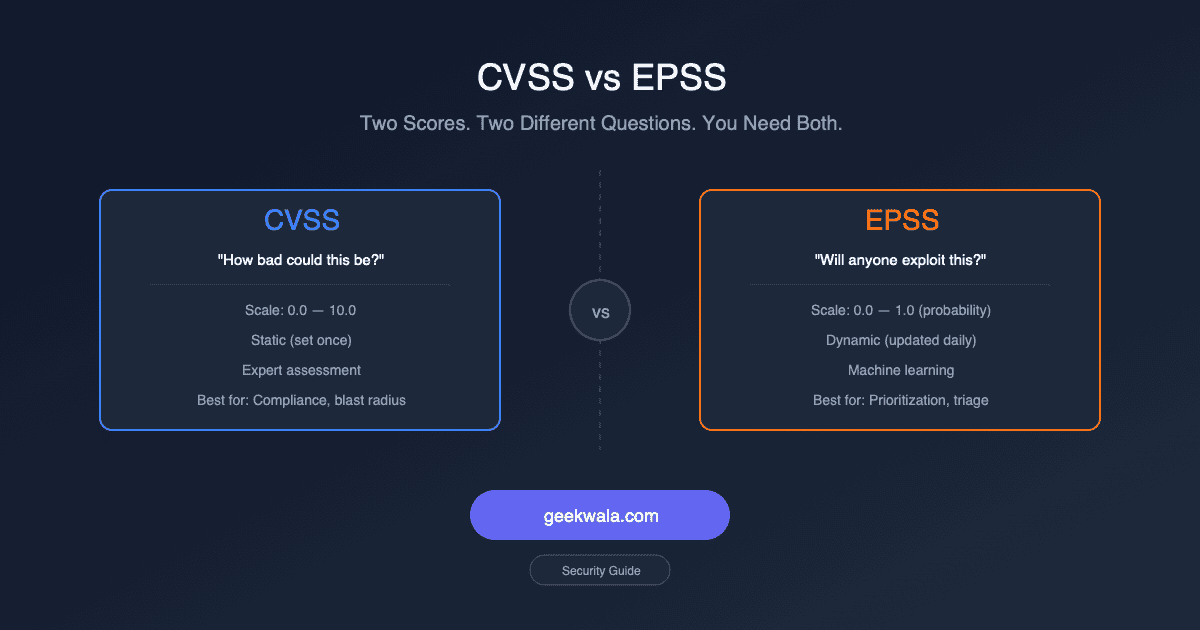
CVSS vs EPSS: Two Vulnerability Score Systems
CVSS and EPSS both score vulnerabilities, but they answer different questions. CVSS asks 'how bad could this be?' while EPSS asks 'will anyone exploit this?' This comparison shows where they agree, where they diverge, and why you need both.
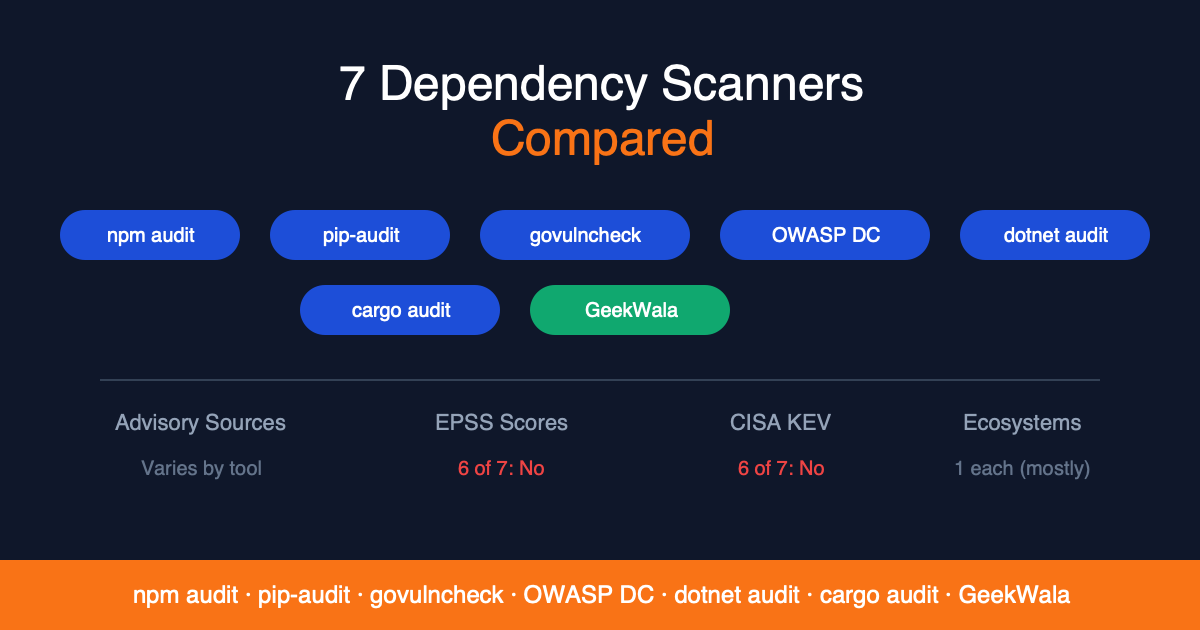
5 Ecosystem-Native Dependency Scanners Compared
Every ecosystem has a built-in vulnerability scanner. None of them tell you which CVEs are being exploited right now. We compared 5 ecosystem-native CLI scanners across advisory sources, exploitation signals, ecosystem coverage, and pricing.
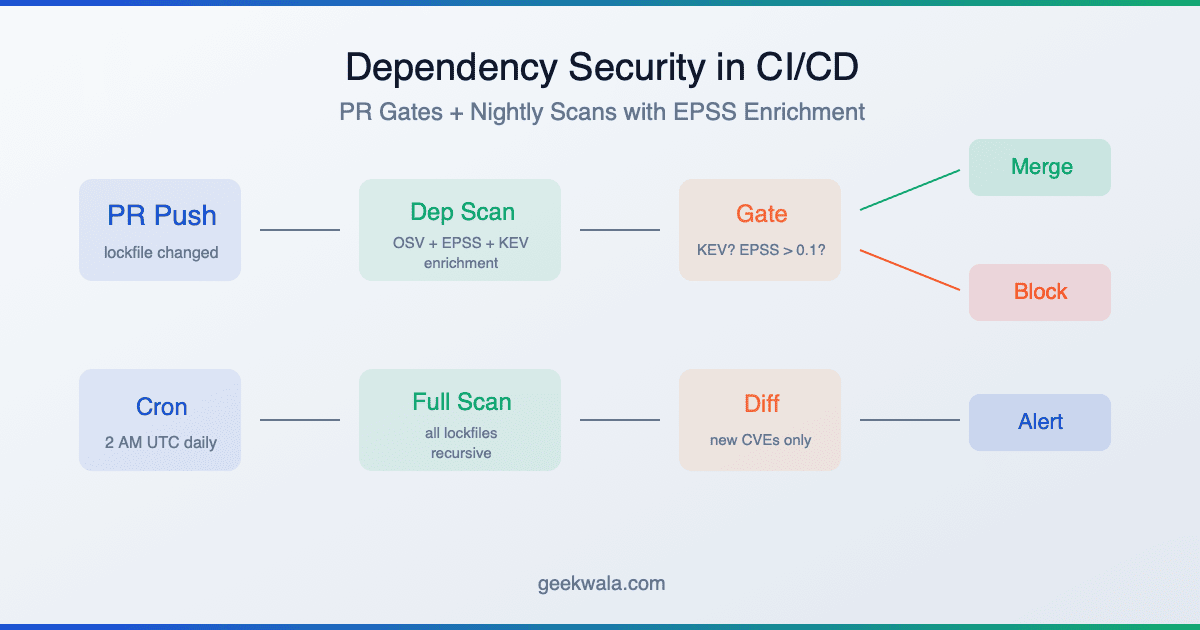
Dependency Scanning in GitHub Actions
Your CI/CD pipeline checks code quality but not dependency security. This guide shows exact GitHub Actions YAML configs for PR vulnerability gates and scheduled nightly scans — with EPSS enrichment to cut false positives.
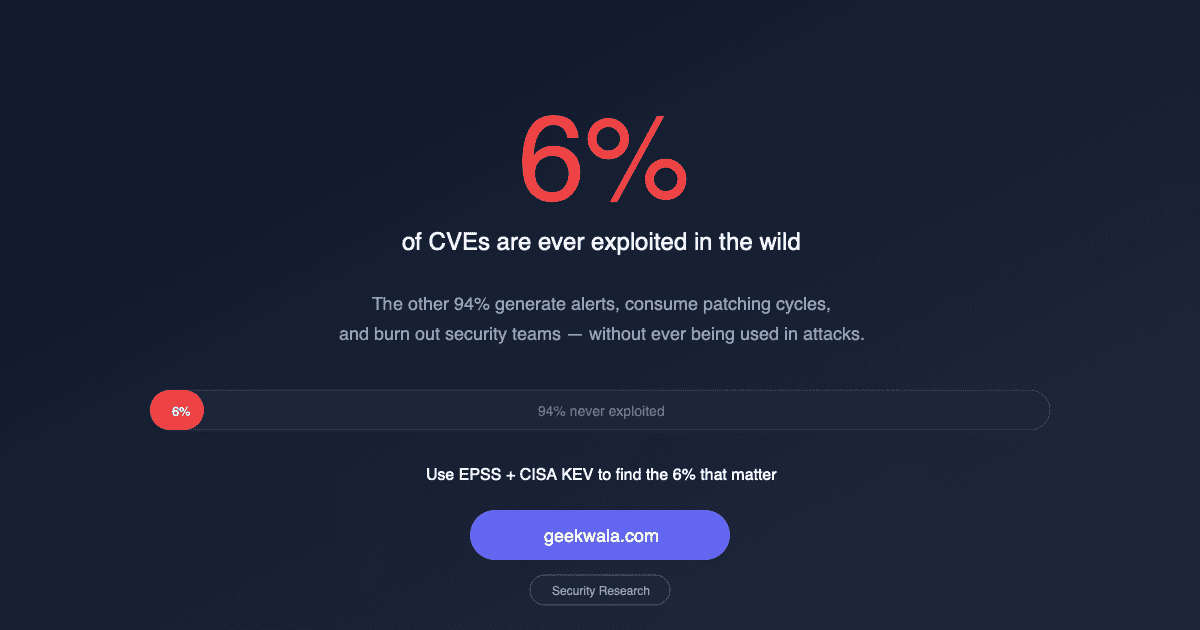
At Most 6% of CVEs Are Exploited: What It Means
At most ~6% of published CVEs are ever exploited in the wild — the most generous estimate, with stricter datasets nearer 1-2%. The rest generate alerts and burn out security teams without ever being used in attacks. This has profound implications for vulnerability prioritization.
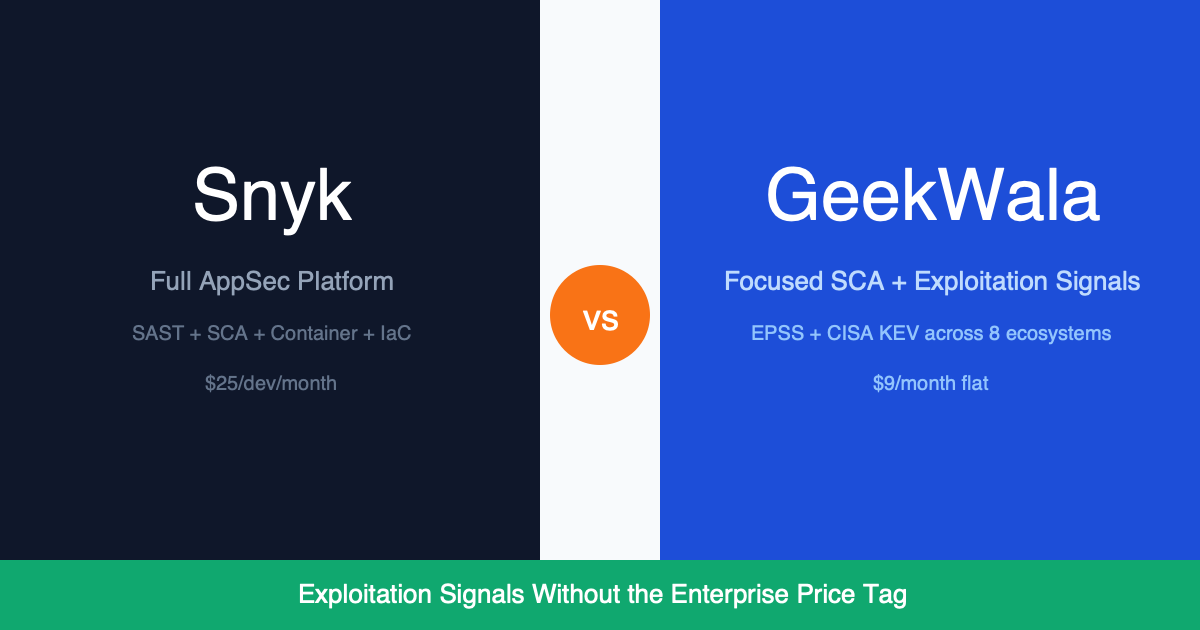
Snyk vs GeekWala: Priority Score vs EPSS + KEV
Snyk's composite scoring (Risk Score, or Priority Score by default) and GeekWala's separate EPSS + CISA KEV fields both aim to cut through CVSS-only alert fatigue, but they get there differently. Here's how each tool's data sources, scan triggers, and prioritization signals actually work.
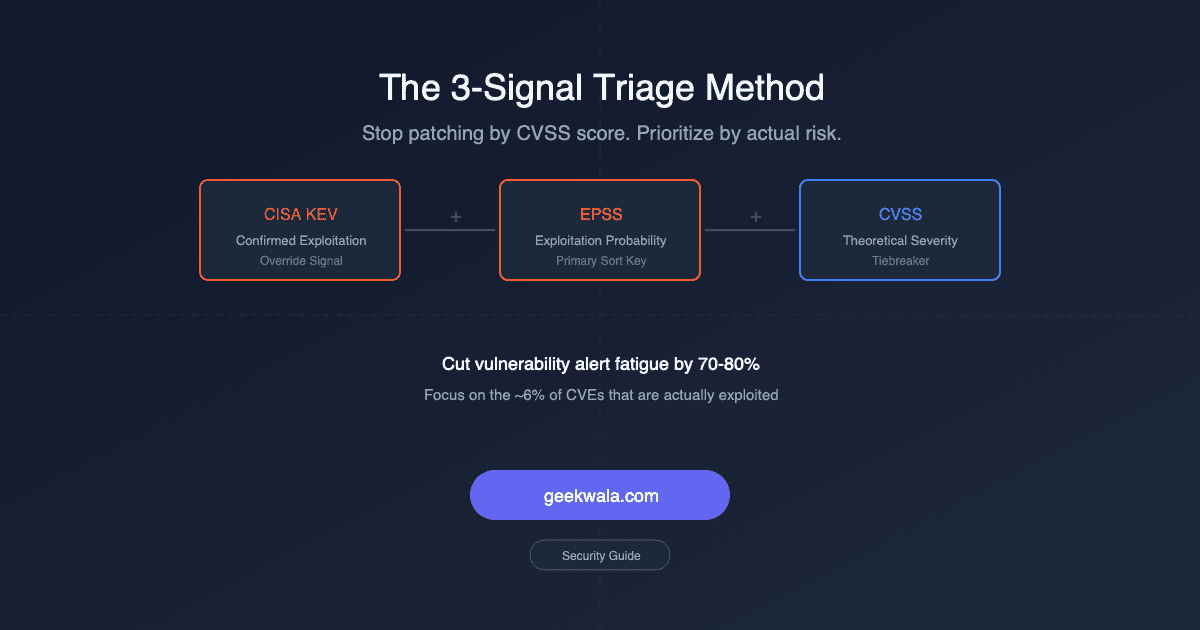
Vulnerability Prioritization: 3-Signal Triage
Most teams waste 80% of their patching effort on vulnerabilities nobody is exploiting. The 3-Signal Triage Method combines CVSS severity, EPSS exploitation probability, and CISA KEV status into a repeatable framework that cuts noise and focuses your team on real risk.
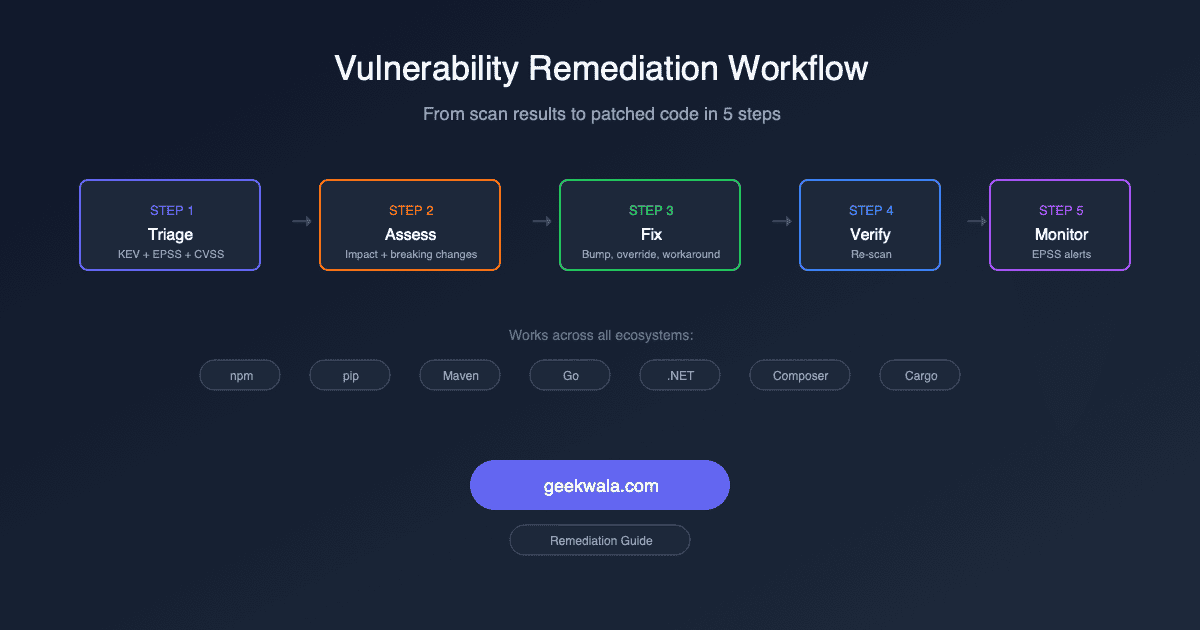
Vulnerability Remediation: Scan to Patched Code
Finding vulnerabilities is easy. Fixing them without breaking your app is where teams stall. This 5-step workflow covers triage, impact assessment, ecosystem-specific fix strategies, verification, and monitoring.