Security Insights & Guides
Cut through vulnerability noise. Practical guides for dev teams who ship.
What pip-audit Misses: EPSS-Aware Prioritization
pip-audit lists every known vulnerability in your Python dependencies and leaves the ordering to you. A reproducible requirements file shows what happens when EPSS and CISA KEV decide the order instead of severity.
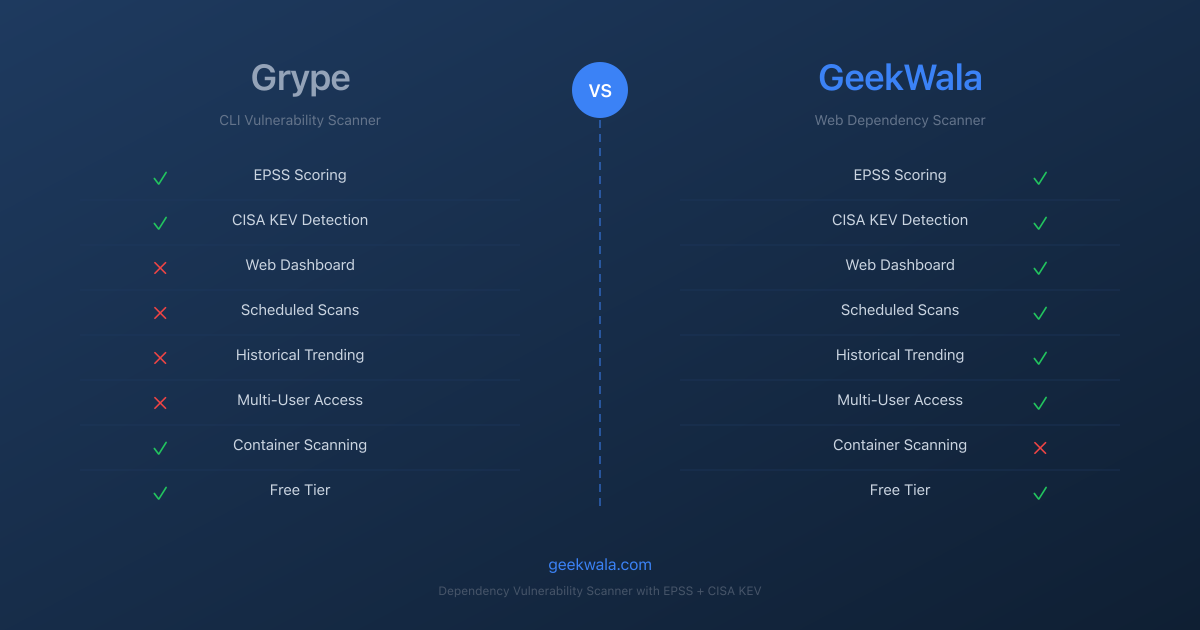
GeekWala vs Grype: Beyond CLI Scanning
Grype is one of the best CLI-based vulnerability scanners available, with genuine EPSS and CISA KEV support built in. But it's CLI-only. GeekWala serves teams that need a web UI, project history, and scheduled re-scans — not just CI/CD engineers who are comfortable with JSON output.
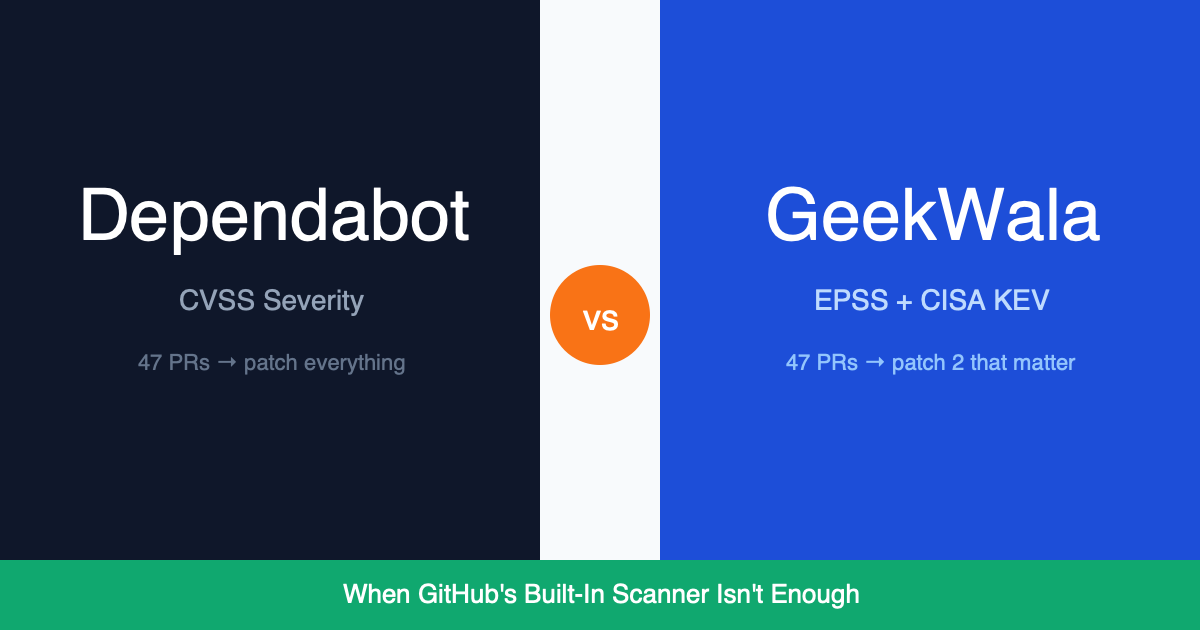
Dependabot PR Automation vs EPSS Triage
Dependabot automates PRs labelled by CVSS severity, with an EPSS score per alert. GeekWala adds CISA KEV confirmed-exploitation status as a first-class field and ranks KEV entries first. Here's how the two tools' triage signals actually differ, and how to use both together.
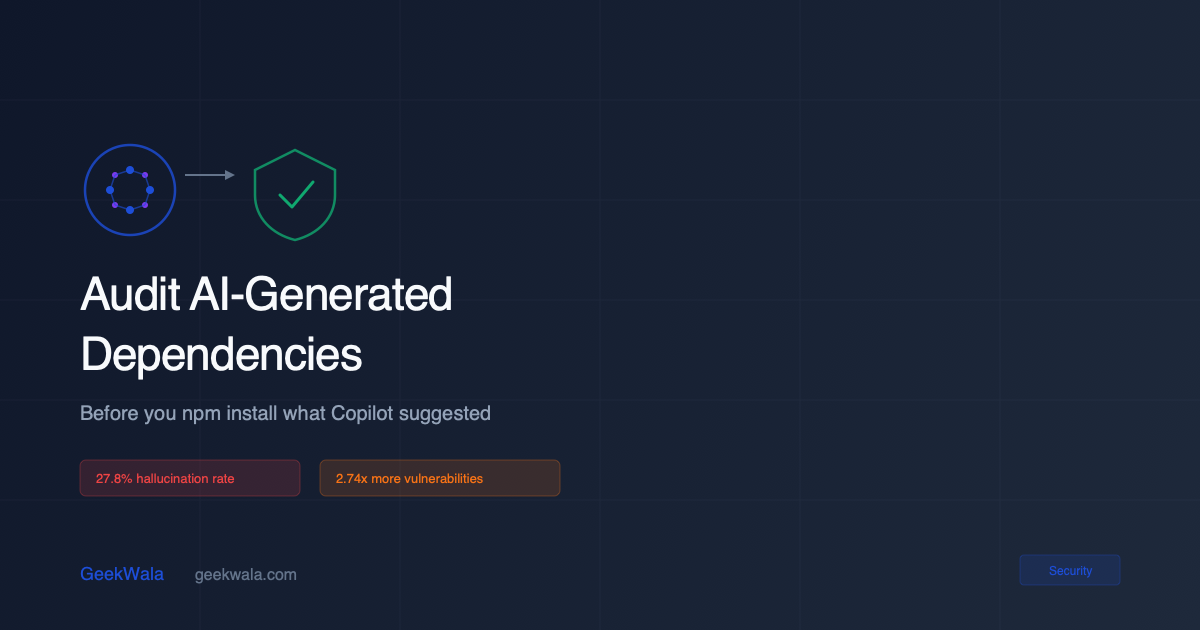
Slopsquatting: Auditing AI-Generated Deps
AI coding assistants generate dependencies as confidently as they generate code — but many suggestions are hallucinated, outdated, or unnecessary. This 4-step audit checklist catches slopsquatting and other AI-generated dependency risks before they reach production.
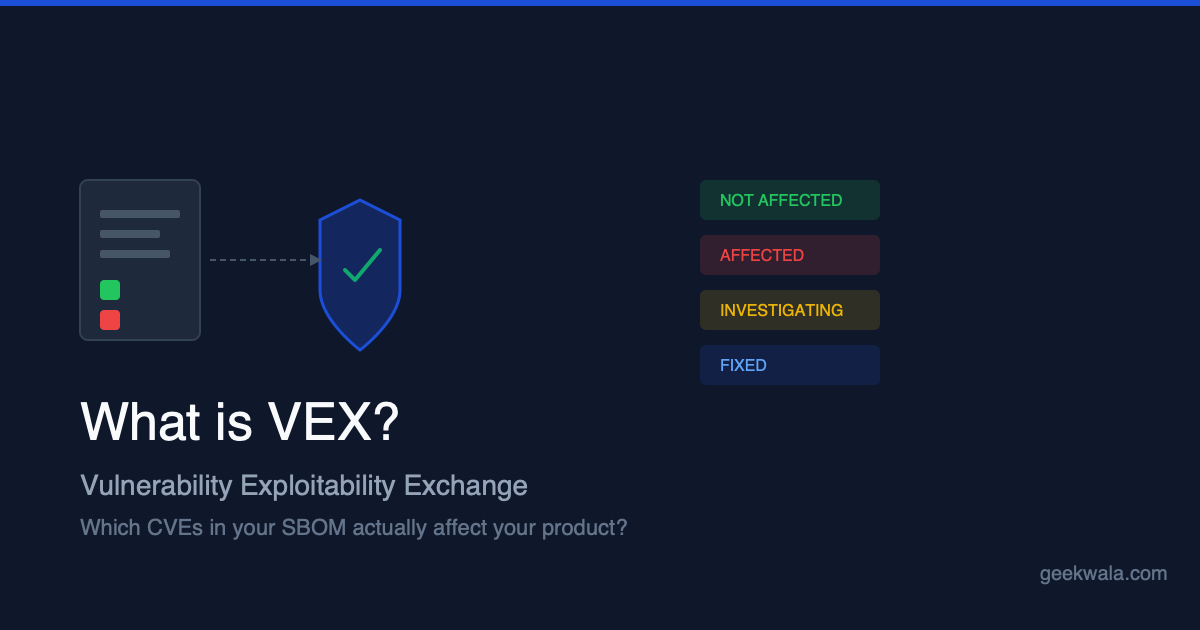
What Is VEX? Vulnerability Exploitability
Your SBOM says you use a vulnerable package. But does the vulnerability actually affect your product? VEX answers that question with a machine-readable document that states whether a known CVE is exploitable, not affected, under investigation, or fixed in your specific product.
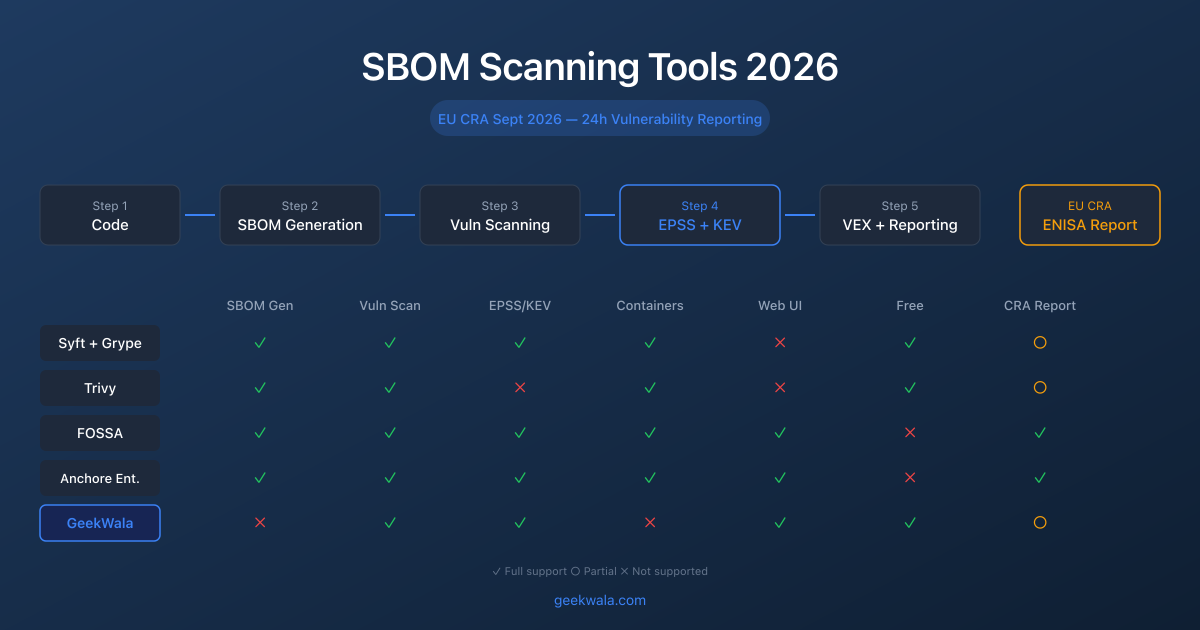
SBOM Scanning Tools 2026: EU CRA Guide
EU CRA's September 2026 deadline requires 24-hour reporting of actively exploited vulnerabilities. You can't meet that deadline without SBOM tooling. This guide covers which tools generate and scan SBOMs, handle EU CRA workflows, and fit your team size and budget.
Software Supply Chain Security for Developers
Supply chain attacks doubled in 2025, most often through compromised dependencies. This guide covers the practical security layers — dependency scanning, SBOM generation, vulnerability triage, and CI/CD hardening — that protect your software without slowing your team down.
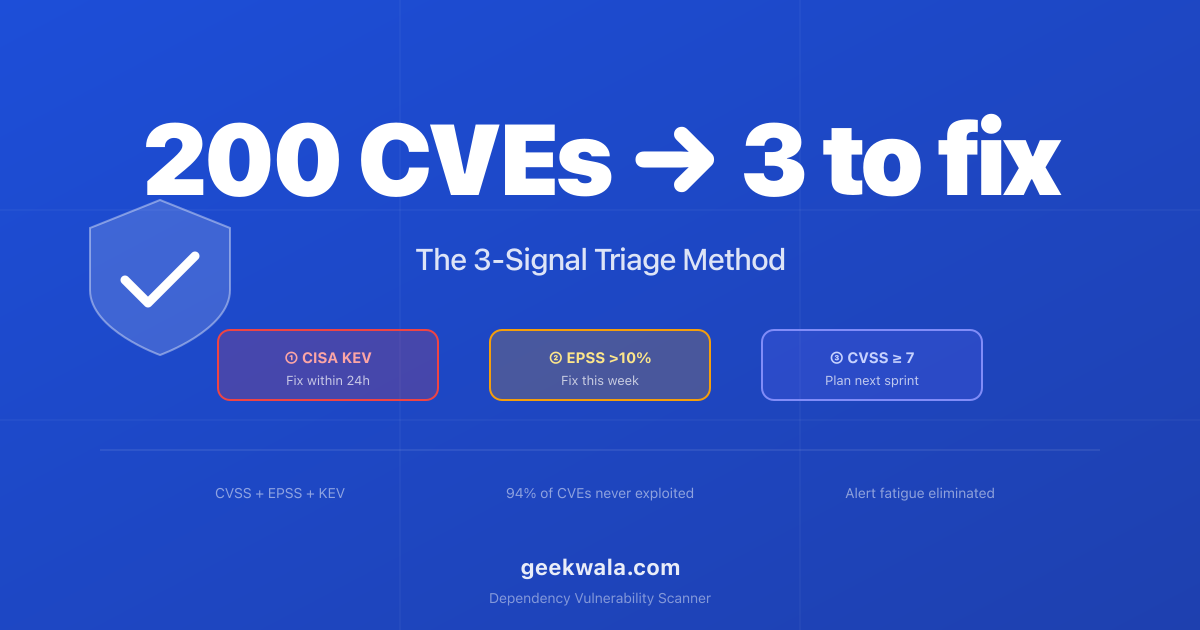
Your Scanner Found 200 CVEs: What to Do
Alert fatigue is the #1 reason teams ignore vulnerability scanners. A developer opens the dashboard, sees 200 red CVEs, and closes the tab. This article is the actionable playbook that turns 200 alerts into a 3-item "fix today" list using the 3-Signal Triage Method (CVSS + EPSS + KEV).
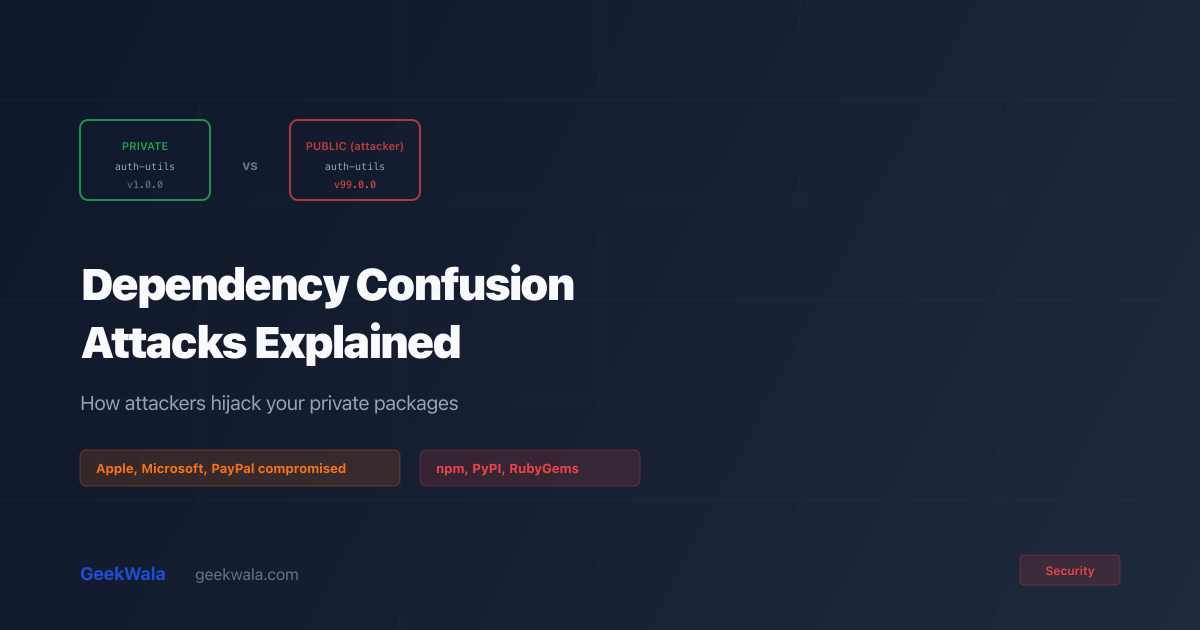
Dependency Confusion Attacks Explained
Dependency confusion is a supply chain attack where attackers register public packages with the same name as your private internal packages. Your package manager installs the attacker's version instead. Here's how it works, which ecosystems are vulnerable, and what you can do about it.
GeekWala vs Socket: CVE vs Behavioral Analysis
Socket.dev detects malicious packages through behavioral analysis. GeekWala prioritizes known vulnerabilities with EPSS and CISA KEV enrichment. These tools solve different problems — here's when to use each, and when to use both.
Most Exploited Vulnerabilities: March 2026
Our monthly analysis of the most dangerous open-source vulnerabilities. March 2026 saw new CISA KEV additions across npm and PyPI, rising EPSS scores on Java libraries, and a continued trend of supply chain attacks targeting build tooling.
OSV vs NVD: Comparing Vulnerability Databases
NVD has been the default vulnerability database for decades, but OSV offers ecosystem-native advisories with faster coverage. Learn how the two databases differ, where each excels, and how GeekWala builds on OSV with EPSS and CISA KEV.