Security Insights & Guides
Cut through vulnerability noise. Practical guides for dev teams who ship.
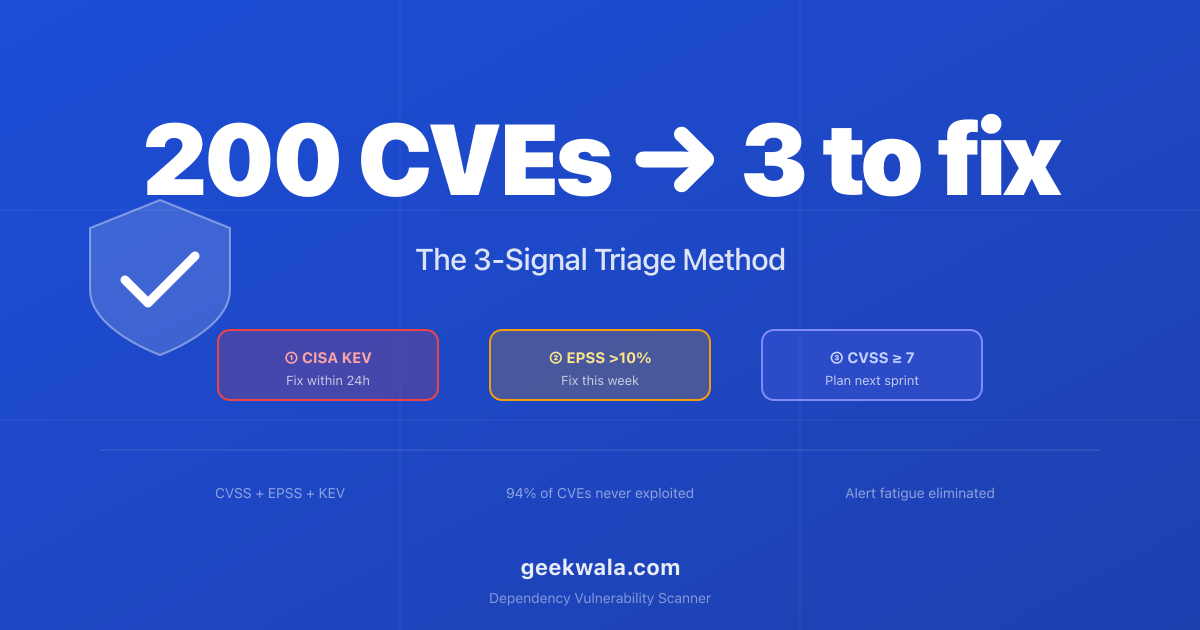
Your Scanner Found 200 CVEs: What to Do
Alert fatigue is the #1 reason teams ignore vulnerability scanners. A developer opens the dashboard, sees 200 red CVEs, and closes the tab. This article is the actionable playbook that turns 200 alerts into a 3-item "fix today" list using the 3-Signal Triage Method (CVSS + EPSS + KEV).
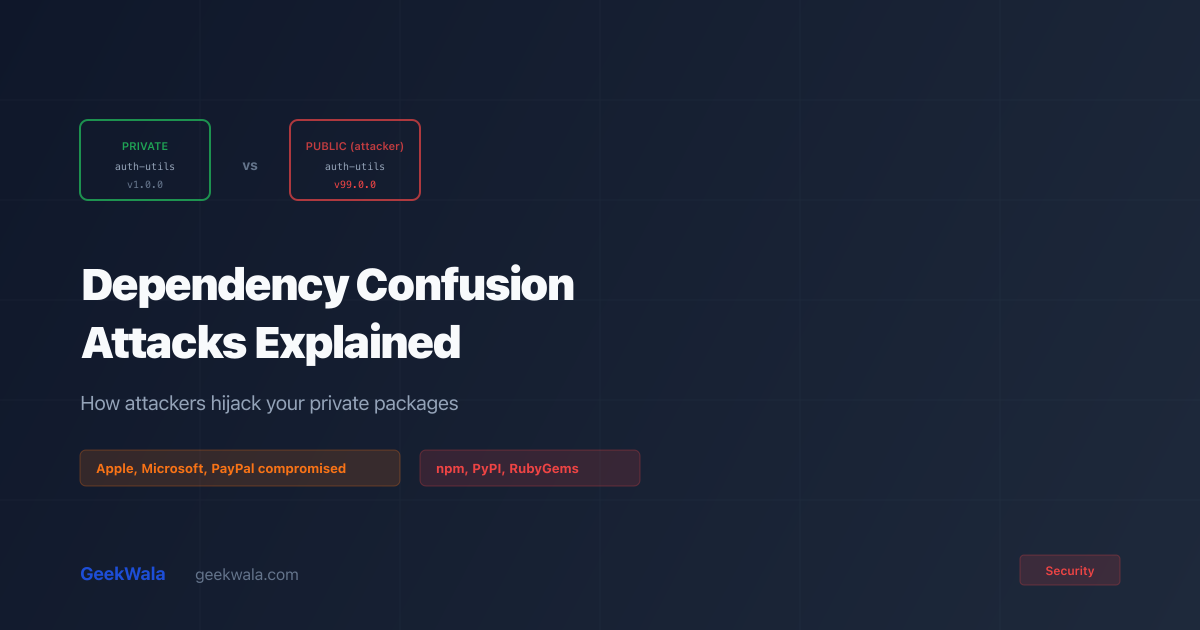
Dependency Confusion Attacks Explained
Dependency confusion is a supply chain attack where attackers register public packages with the same name as your private internal packages. Your package manager installs the attacker's version instead. Here's how it works, which ecosystems are vulnerable, and what you can do about it.
GeekWala vs Socket: CVE vs Behavioral Analysis
Socket.dev detects malicious packages through behavioral analysis. GeekWala prioritizes known vulnerabilities with EPSS and CISA KEV enrichment. These tools solve different problems — here's when to use each, and when to use both.
Most Exploited Vulnerabilities: March 2026
Our monthly analysis of the most dangerous open-source vulnerabilities. March 2026 saw new CISA KEV additions across npm and PyPI, rising EPSS scores on Java libraries, and a continued trend of supply chain attacks targeting build tooling.
OSV vs NVD: Comparing Vulnerability Databases
NVD has been the default vulnerability database for decades, but OSV offers ecosystem-native advisories with faster coverage. Learn how the two databases differ, where each excels, and how GeekWala builds on OSV with EPSS and CISA KEV.
Supply Chain Attacks: What Scanners Catch in 2026
Dependency scanners catch known CVEs in legitimate packages. Supply chain attacks are different — malicious code injected by attackers who compromise maintainers or publish typosquatted packages. Here's what scanning covers and the defense layers you need for the rest.
What Is Dependency Vulnerability Scanning?
Dependency vulnerability scanning finds known security flaws in your project's third-party packages. This guide covers how scanning works, why CVSS alone isn't enough for prioritization, and how to build a practical workflow across all major ecosystems.
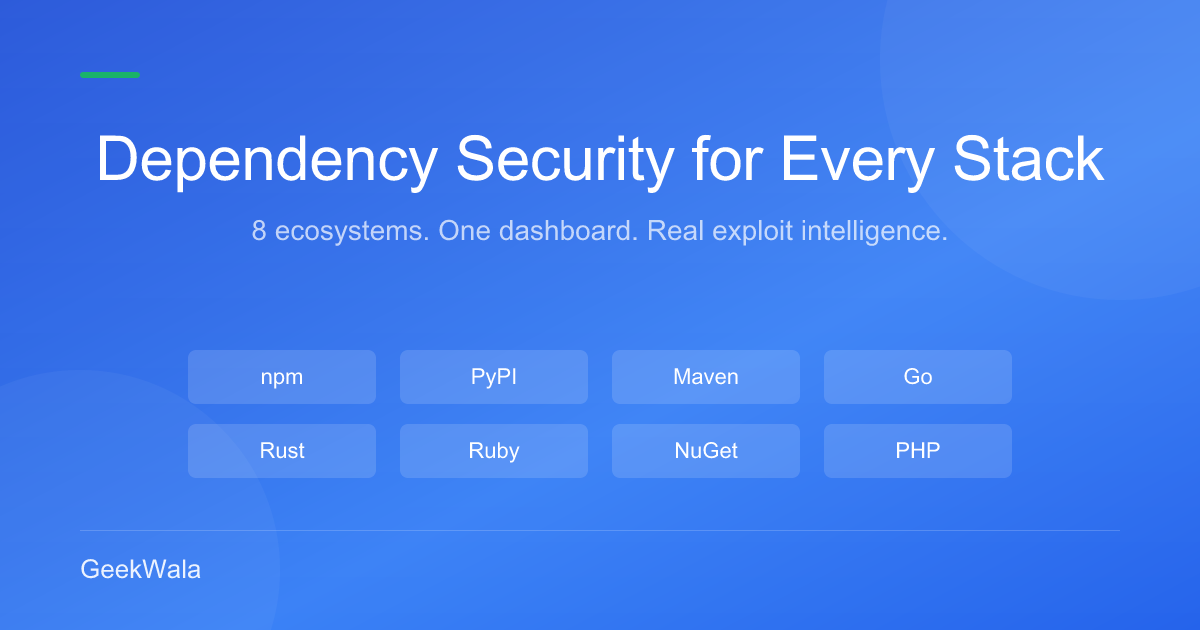
Dependency Security Across 8 Ecosystems
Most teams use 2-3 languages but scan dependencies one ecosystem at a time. This guide maps native audit tools for all 8 major ecosystems and shows what each one misses — plus how to unify scanning across your entire stack.
PHP Dependency Security: Beyond composer audit
composer audit flags PHP vulnerabilities with an advisory severity, but most CVEs are never exploited. Learn how EPSS scoring and CISA KEV data cut through alert fatigue for Laravel, Symfony, and WordPress Composer dependencies.
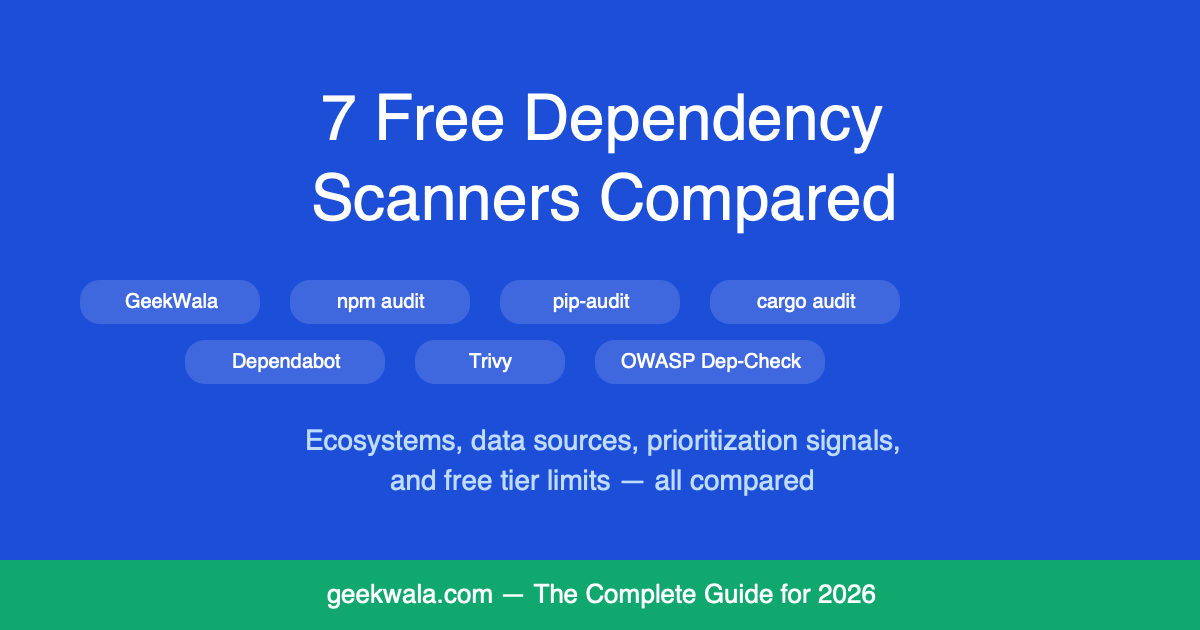
Free Dependency Scanning Tools 2026 Guide
You don't need an enterprise budget to scan dependencies for vulnerabilities. This is the broadest survey: 7 free tools across every major language, including hosted options like GeekWala, Dependabot, and Trivy alongside CLI-native scanners.
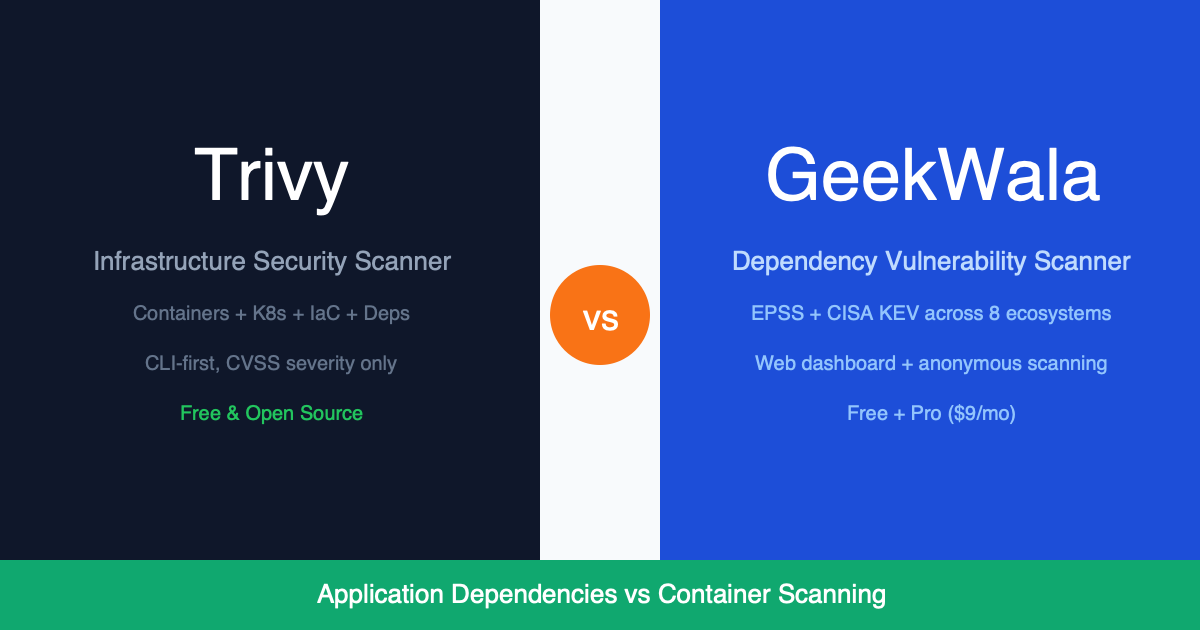
Trivy Container Scan vs EPSS Enrichment
Trivy is a broad infrastructure scanner covering containers, Kubernetes, and IaC. GeekWala is a focused dependency scanner enriching every finding with EPSS exploit probability and CISA KEV status. Here's how the two tools actually detect and prioritize differently.
200 Dependabot Alerts: Which 3 to Fix Today
The average GitHub repository has 67 open Dependabot alerts. Most developers either ignore them all or waste time on low-risk CVEs. The 3-Signal Triage Method — combining CVSS with EPSS and CISA KEV — cuts your actionable list from hundreds to single digits, so you fix what actually matters.