Articles Tagged Vulnerability Prioritization
All GeekWala articles tagged Vulnerability Prioritization.
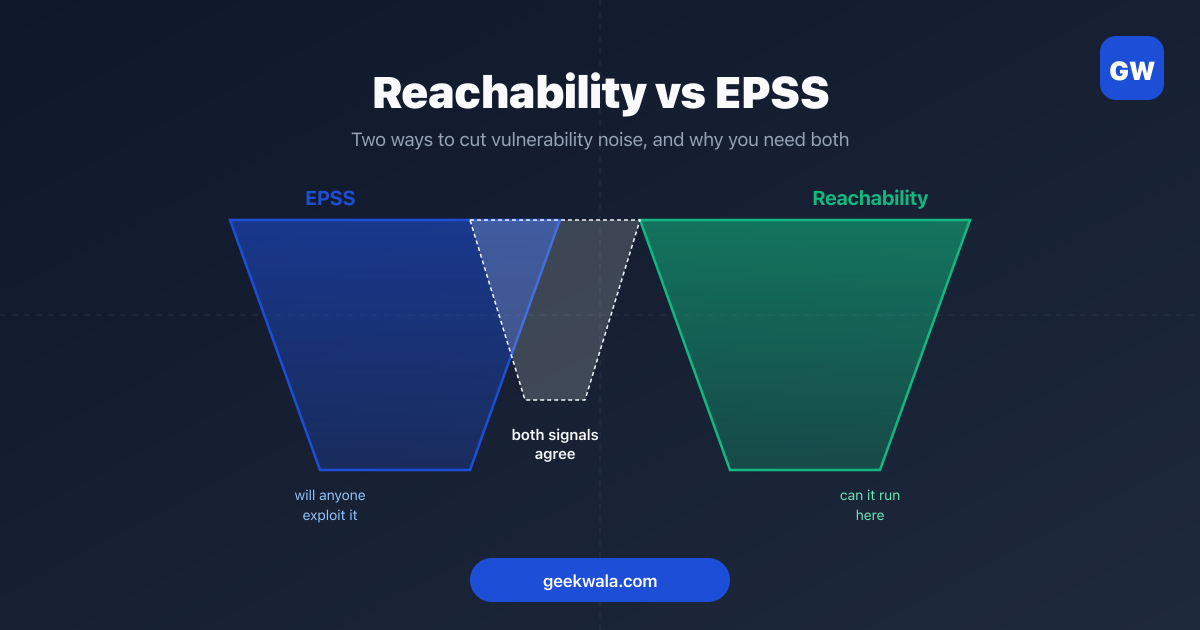
Reachability vs EPSS: Cutting False Positives
Two scanners, same repo, two different finding counts. Neither is wrong. Reachability asks whether your code calls the vulnerable function. EPSS asks whether anyone will exploit it. How they compare, where each fails, and how to combine them without discarding the KEV signal that matters most.
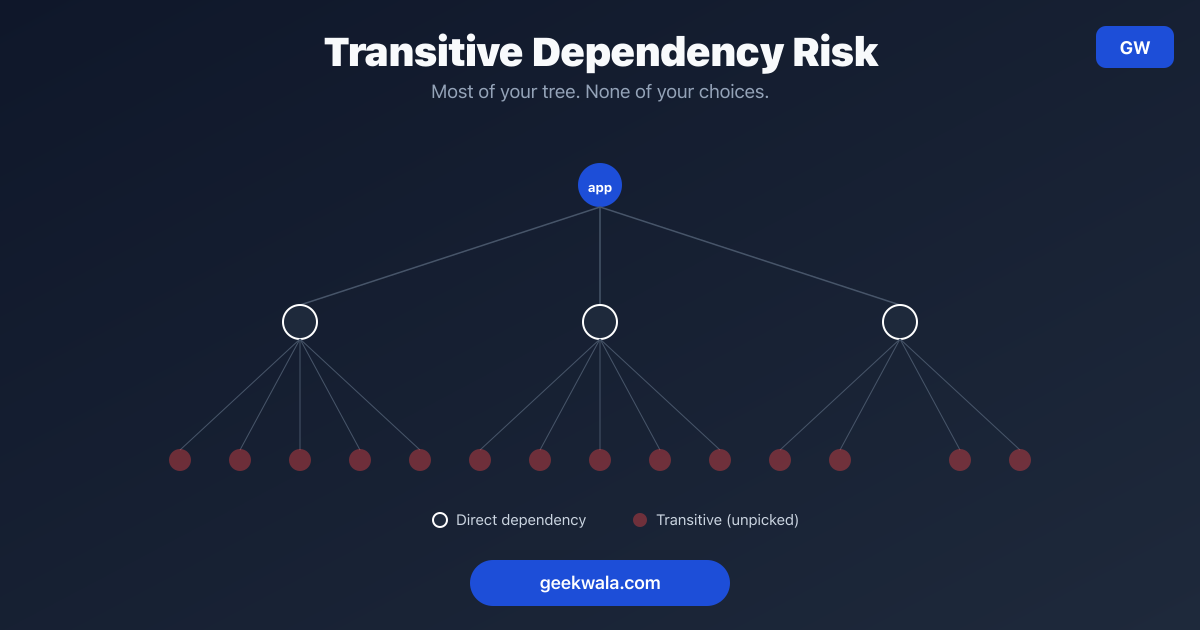
Transitive Dependency Risk: What You Can't See
Your package.json lists a dozen packages; your lockfile resolves over a thousand. Sonatype puts roughly 6 in 7 known vulnerabilities in that transitive layer. Here's how to trace one to its parent and the four ways to actually fix it.
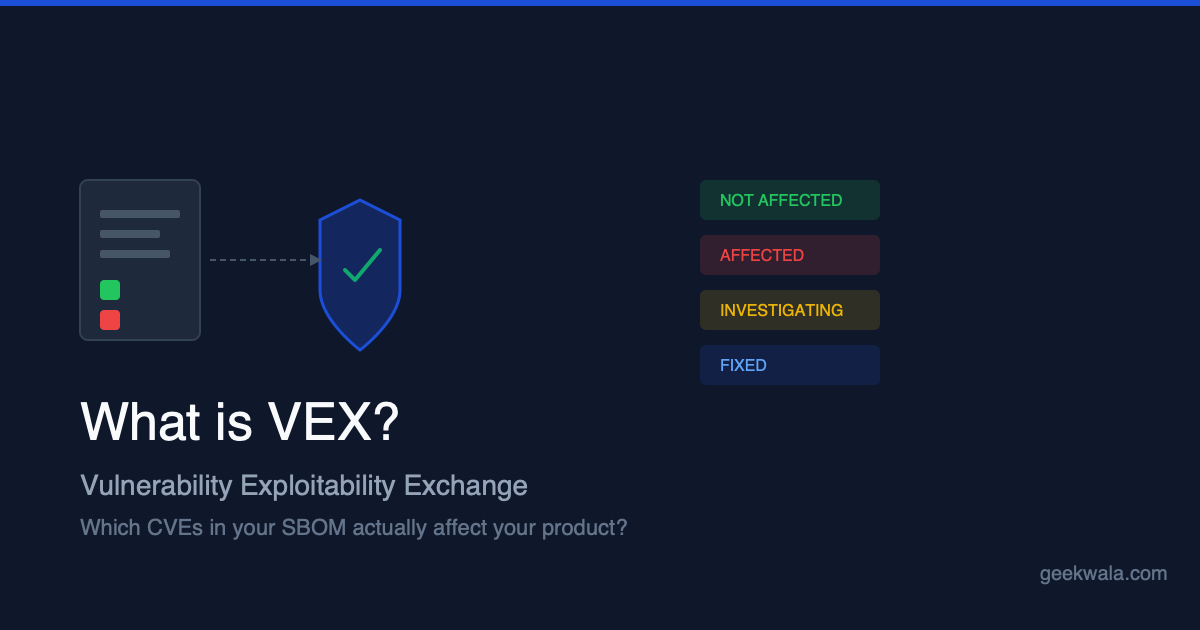
What Is VEX? Vulnerability Exploitability
Your SBOM says you use a vulnerable package. But does the vulnerability actually affect your product? VEX answers that question with a machine-readable document that states whether a known CVE is exploitable, not affected, under investigation, or fixed in your specific product.
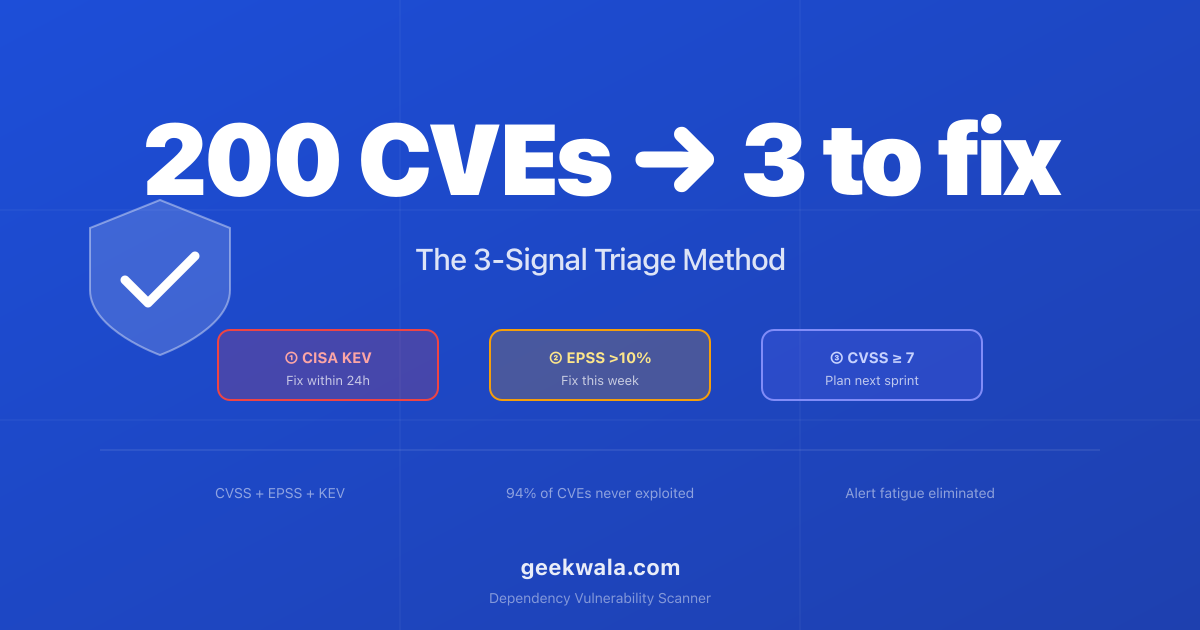
Your Scanner Found 200 CVEs: What to Do
Alert fatigue is the #1 reason teams ignore vulnerability scanners. A developer opens the dashboard, sees 200 red CVEs, and closes the tab. This article is the actionable playbook that turns 200 alerts into a 3-item "fix today" list using the 3-Signal Triage Method (CVSS + EPSS + KEV).
200 Dependabot Alerts: Which 3 to Fix Today
The average GitHub repository has 67 open Dependabot alerts. Most developers either ignore them all or waste time on low-risk CVEs. The 3-Signal Triage Method — combining CVSS with EPSS and CISA KEV — cuts your actionable list from hundreds to single digits, so you fix what actually matters.
CVSS, EPSS, KEV, SSVC, and LEV Compared
Five vulnerability scoring systems compete for developer attention: CVSS, EPSS, CISA KEV, SSVC, and LEV. Each answers a different question about risk. This guide compares all five — what they measure, who maintains them, and how to combine the right signals for your team.
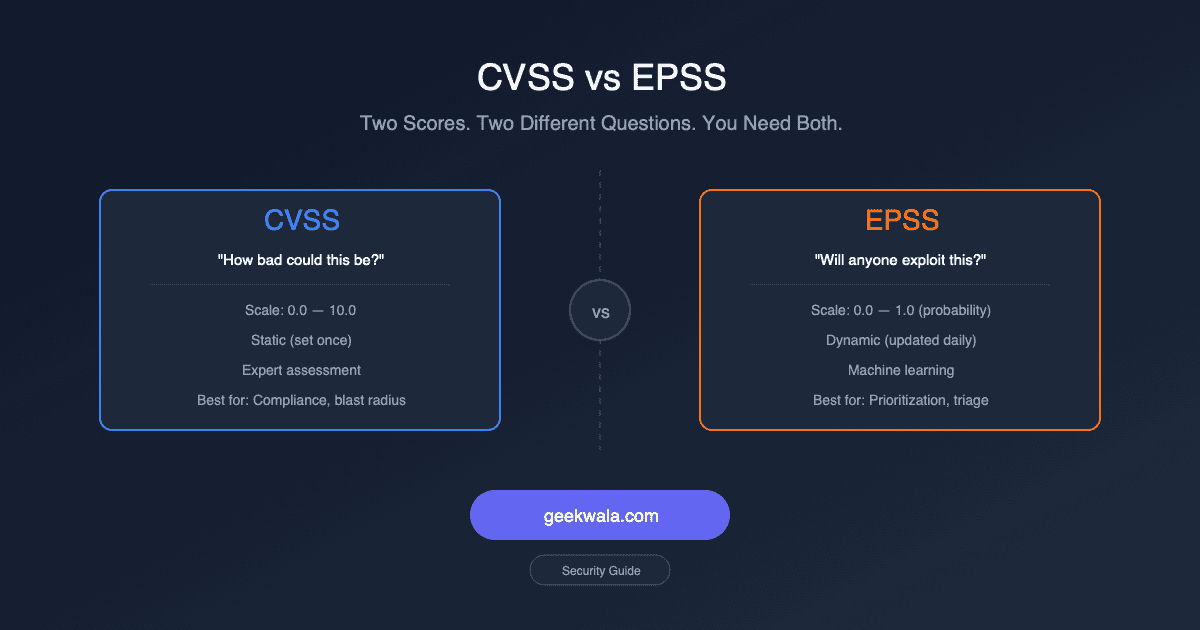
CVSS vs EPSS: Two Vulnerability Score Systems
CVSS and EPSS both score vulnerabilities, but they answer different questions. CVSS asks 'how bad could this be?' while EPSS asks 'will anyone exploit this?' This comparison shows where they agree, where they diverge, and why you need both.
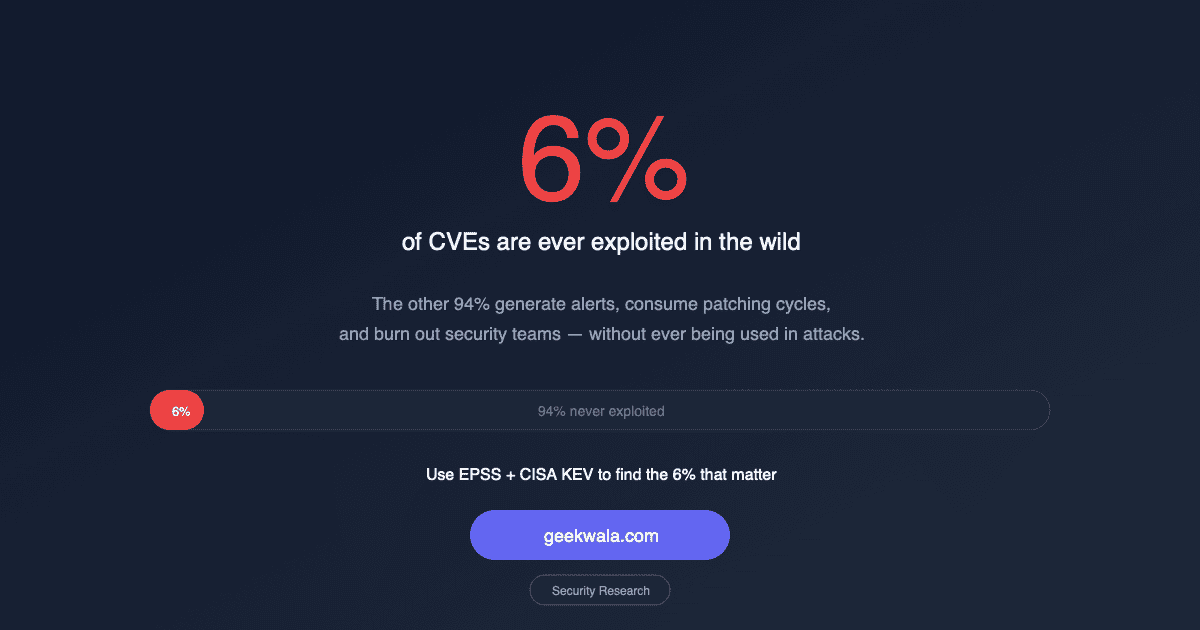
At Most 6% of CVEs Are Exploited: What It Means
At most ~6% of published CVEs are ever exploited in the wild — the most generous estimate, with stricter datasets nearer 1-2%. The rest generate alerts and burn out security teams without ever being used in attacks. This has profound implications for vulnerability prioritization.
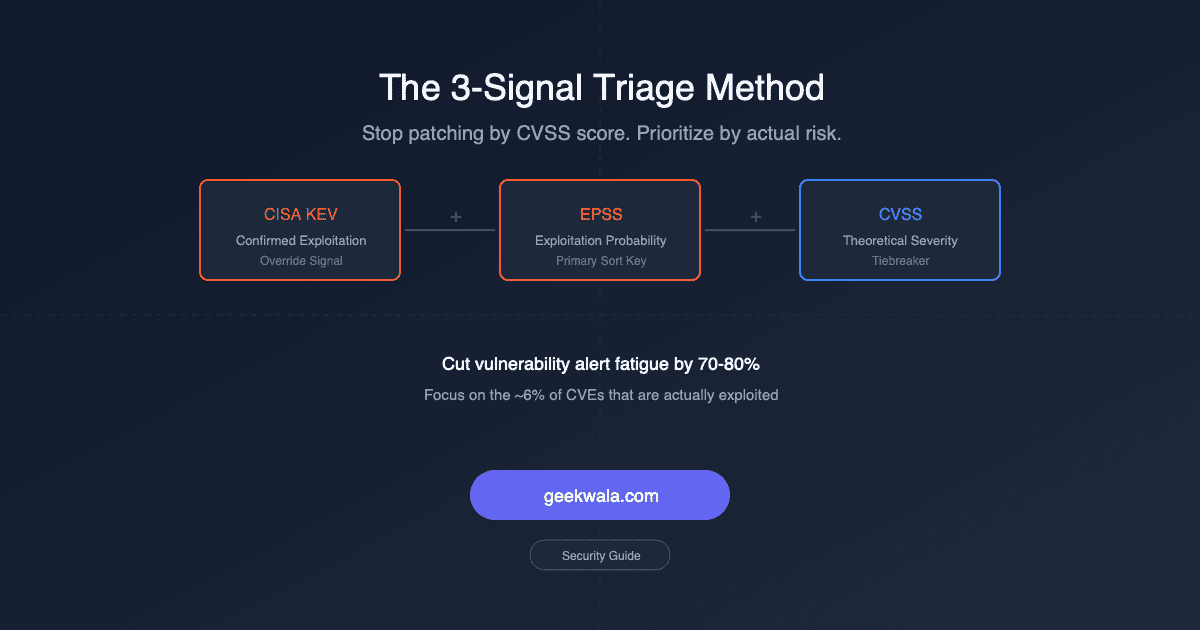
Vulnerability Prioritization: 3-Signal Triage
Most teams waste 80% of their patching effort on vulnerabilities nobody is exploiting. The 3-Signal Triage Method combines CVSS severity, EPSS exploitation probability, and CISA KEV status into a repeatable framework that cuts noise and focuses your team on real risk.
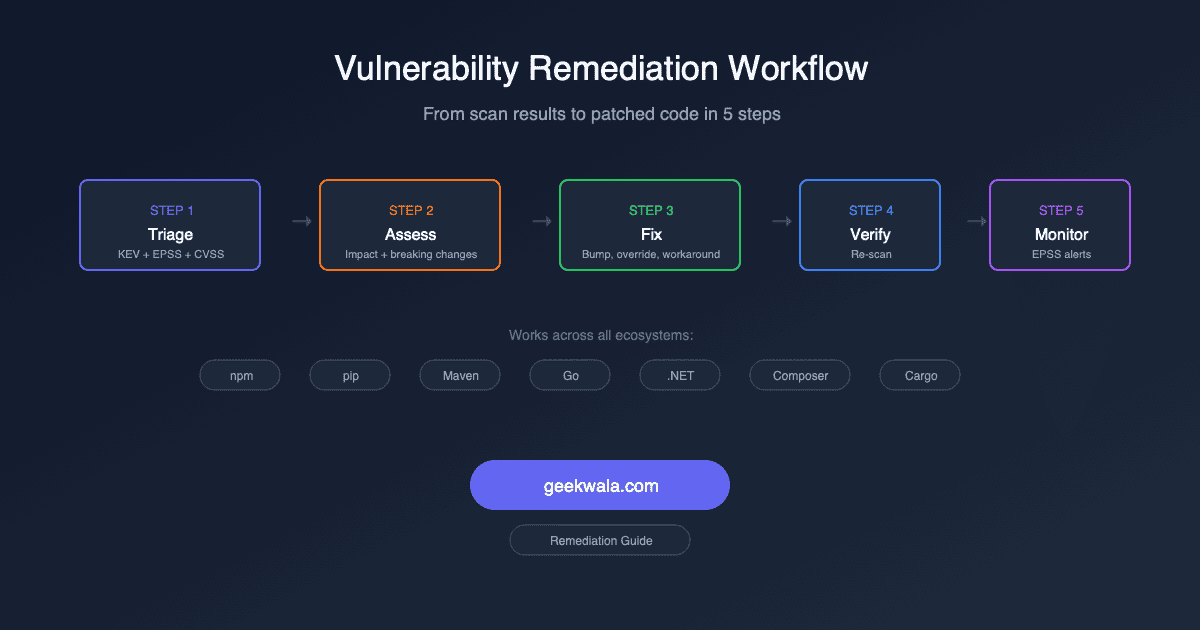
Vulnerability Remediation: Scan to Patched Code
Finding vulnerabilities is easy. Fixing them without breaking your app is where teams stall. This 5-step workflow covers triage, impact assessment, ecosystem-specific fix strategies, verification, and monitoring.