Key a vulnerability remediation SLA on exploitation signal, not CVSS alone: CISA KEV entries get a 72-hour clock, EPSS ≥ 0.1 gets fixed in the current sprint, CVSS-critical findings confirmed reachable in runtime code get the next sprint, and everything else follows your normal patch cadence. Start the clock at scan detection, and record every exception with a named approver and a re-review date.
Most vulnerability SLAs get written as a four-row table keyed on CVSS severity: critical, 7 days. High, 30. Medium, 90. Low, 180. It looks rigorous. It reads well in an audit prep deck. And it's the reason teams miss their own SLAs quarter after quarter, because that table commits you to a 7-day clock on a CVE nobody will ever exploit, and gives you 30 days on one that's already sitting in CISA's Known Exploited Vulnerabilities catalog.
We've reviewed enough of these policies to notice the pattern repeats almost exactly. The table gets written once, in good faith, then quietly becomes the thing the team is embarrassed to bring up in the next audit.
What We'll Cover
- Why severity-keyed SLAs fail
- A signal-keyed SLA that works
- The clock-start problem
- Making the SLA auditable
- A copy-pasteable policy skeleton
- Mapping to compliance frameworks
- FAQ
Why Severity-Keyed SLAs Fail
Run the arithmetic on a policy that looks completely reasonable on paper. A repo with 60 open findings, 8 of them CVSS-critical, and a 7-day SLA on critical severity. That's 8 seven-day clocks running every quarter, all racing at once, most of them attached to CVEs with an EPSS score under 0.01: a very low predicted chance of being exploited in the next 30 days.
Two things happen from here, and neither one is good. Either the team burns real engineering time hitting all 8 clocks on schedule, most of which didn't need to be urgent, or the team quietly misses several of them because the sprint had actual product work in it too. A policy that gets missed routinely stops functioning as a policy. It becomes a number auditors write down and everyone privately ignores. Teams in the second group often respond by turning down scanner sensitivity or suppressing findings just to stop the SLA clock from starting at all, which is a worse outcome than having no SLA in the first place.
The 3-Signal Triage Method exists because CVSS measures theoretical severity, not observed exploitation. An SLA built entirely on that one axis inherits its blind spot: it can't tell the difference between a CVSS 9.8 nobody has ever touched and a CVSS 6.1 with a live Metasploit module and a KEV entry. If your list runs into the hundreds rather than dozens, the triage step described in what to do when your scanner finds 200 CVEs has to happen before an SLA can mean anything at all: you can't apply a policy to a backlog nobody has sorted yet.
A Signal-Keyed SLA That Works
The fix isn't a looser SLA. It's a smaller strict tier, built from signals that actually correlate with real-world exploitation.
| Tier | Trigger | Clock | Owner | Escalation | Accepted-risk path |
|---|---|---|---|---|---|
| 1 | On CISA KEV | 72 hours | On-call engineer + team lead | Page security lead at 48h if unpatched | None while a fix exists; with no fix, mitigate and track (see the FAQ) |
| 2 | EPSS ≥ 0.1 | Current sprint | Assigned engineer | Team lead reviews at sprint midpoint | Documented, security-lead sign-off, 30-day max |
| 3 | CVSS-critical, confirmed reachable in runtime code, EPSS < 0.1 | Next sprint | Assigned engineer | Rolls to following sprint if capacity-blocked | Documented, engineering-lead sign-off |
| 4 | Everything else: not KEV, low EPSS, not reachable, or dev-only | Normal patch cadence | Team backlog | None | Implicit — logged and revisited monthly |
The accepted-risk row matters as much as the clock column. An SLA with no documented exception path is one your team routes around silently instead of following, because real work sometimes genuinely can't hit a 72-hour clock (a vendor patch isn't out yet, or the fix requires a breaking API change that needs a release window). Write the exception process into the policy itself so a legitimate miss becomes a logged decision instead of a quiet failure nobody can find later.
The Clock-Start Problem
Every auditor asks this question, and most policies fudge the answer: does the SLA clock start at CVE publication, at advisory publication in whatever registry you watch, or at the moment your own scan detects the finding?
For an internal SLA, scan detection is the only defensible answer, because it's the only moment you actually control. CVE publication and advisory publication both happen on someone else's schedule, and you have no way to prove you "knew" at that exact moment unless you were already scanning continuously. Starting the clock at detection means your SLA is honest about what it's actually measuring: your organization's response time from the moment it had the information, not the vulnerability's entire public lifetime.
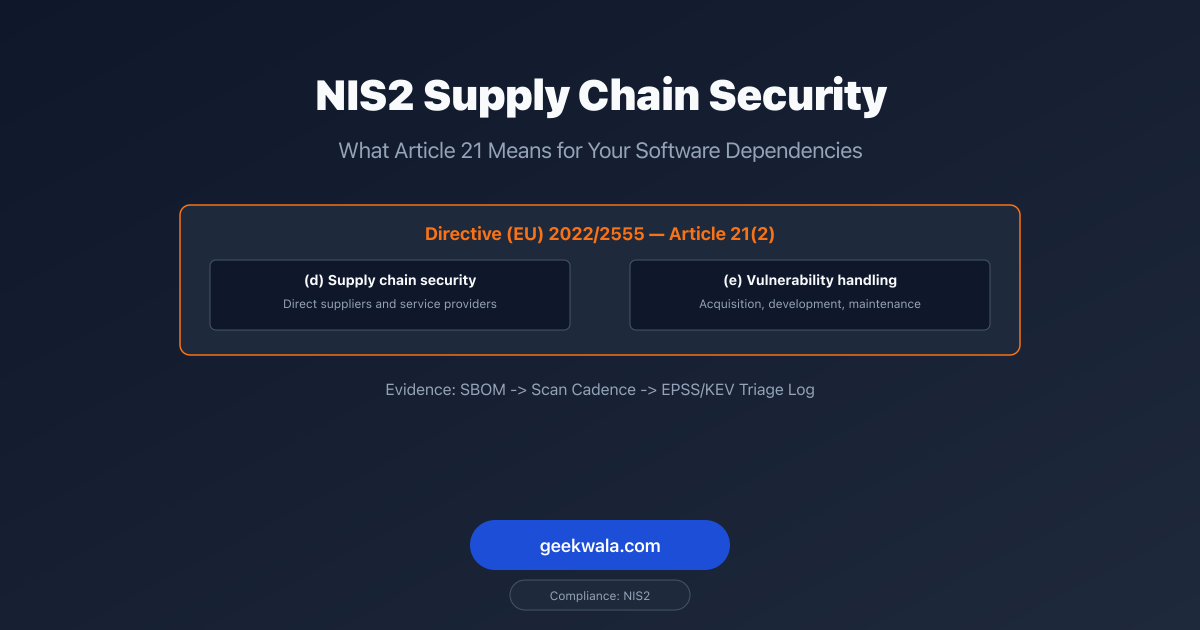
There's a quiet cost hiding in this choice, though. If your scan cadence is weekly, you've silently added up to 7 days onto every SLA clock before it even starts, because a finding published on day one of your scan window doesn't reach a human until day seven. A daily scan cadence caps that hidden lag at 24 hours. If your team's real bottleneck is detection lag rather than remediation speed, automated dependency scanning closes that gap directly, and it's worth fixing before you tighten the SLA further, since a stricter clock on top of a slow scan cadence just moves the failure earlier.
Making the SLA Auditable
Nine months from now, an auditor (or your own team, mid-incident-review) will ask you to reconstruct a decision you made about a finding you've long since patched or accepted. What you need to produce, per finding:
- The finding itself, with its CVE or advisory identifier
- Its EPSS score and KEV status at the moment of detection — not today's values
- The tier it was assigned under your policy
- The action taken and when
- The exception record, if the SLA was deferred rather than met
That second bullet is the trap most policies fall into. EPSS is a moving score, recalculated daily as FIRST.org ingests new exploitation telemetry. A CVE sitting at EPSS 0.02 on the day you triaged it can be sitting at 0.6 six months later after a public exploit dropped. If you audit last quarter's triage decision against today's EPSS number, you'll conclude the team made the wrong call, when in fact they made the right call against the information that existed at the time. Capture the score at detection, store it with the finding, and audit against that stored value, not a live lookup.
A Copy-Pasteable Policy Skeleton
This is the part worth pasting into an actual document rather than treating as an outline. Adapt names and numbers to your own team; the structure below is what makes it auditable.
Scope. This policy governs remediation timelines for vulnerabilities identified in production and pre-production dependencies across [list your repositories or services]. It does not cover vulnerabilities in vendor SaaS products outside our direct control, which are tracked separately under vendor risk management.
Tiers and clocks. Findings are assigned to one of four tiers at the time of detection, based on CISA KEV membership, EPSS score, and confirmed reachability in runtime code. Tier 1 (KEV) carries a 72-hour remediation clock with no exception path while a fix exists. Tier 2 (EPSS ≥ 0.1) carries a current-sprint clock, exception-eligible with security-lead sign-off up to 30 days. Tier 3 (CVSS-critical, reachable, low EPSS) carries a next-sprint clock. Tier 4 (everything else) follows normal patch cadence and is reviewed monthly.
Clock start. The remediation clock starts at the timestamp our scanning tooling first detects the finding, not at CVE publication or advisory publication. Our scan cadence is [daily/weekly]; findings are triaged into a tier within one business day of detection.
Ownership. Each finding is assigned to the engineer who owns the affected service at the time of triage. Tier 1 findings additionally page the on-call rotation. Escalation to the security lead occurs automatically if a Tier 1 finding remains open past 48 hours.
Exception process. A finding may be granted an accepted-risk exception if remediation is blocked by a dependency outside our control (no vendor fix available, breaking change requiring a coordinated release). Exceptions require written justification, a named approver at the tier's specified authority level, and a re-review date no later than 30 days out. KEV-tier findings are eligible only when no fix exists at all, and then only as mitigate-and-track: the mitigating controls are documented and the finding is re-checked at a short interval until a fix ships.
Review cadence. This policy, including its tier thresholds and clock durations, is reviewed quarterly by the security lead and updated as our exploitation-signal sources or risk tolerance change.
Mapping to Compliance Frameworks
This section is informational, not legal or compliance advice — verify current requirements against the primary standard text and your own auditor's guidance before finalizing a policy.
ISO/IEC 27001:2022 addresses this directly under Annex A control A.8.8, "Management of technical vulnerabilities." Cite that identifier precisely; it's the current, correct one for the 2022 revision.
SOC 2 doesn't map as cleanly. Auditors commonly map vulnerability management to Trust Services Criteria CC7.1, but SOC 2's points of focus are illustrative and auditor-discretionary rather than fixed mandates the way ISO's Annex A controls are. You can quote CC7.1's criterion text, but it sets no remediation deadline and its points of focus are not mandatory, so the clocks are yours to define and defend.
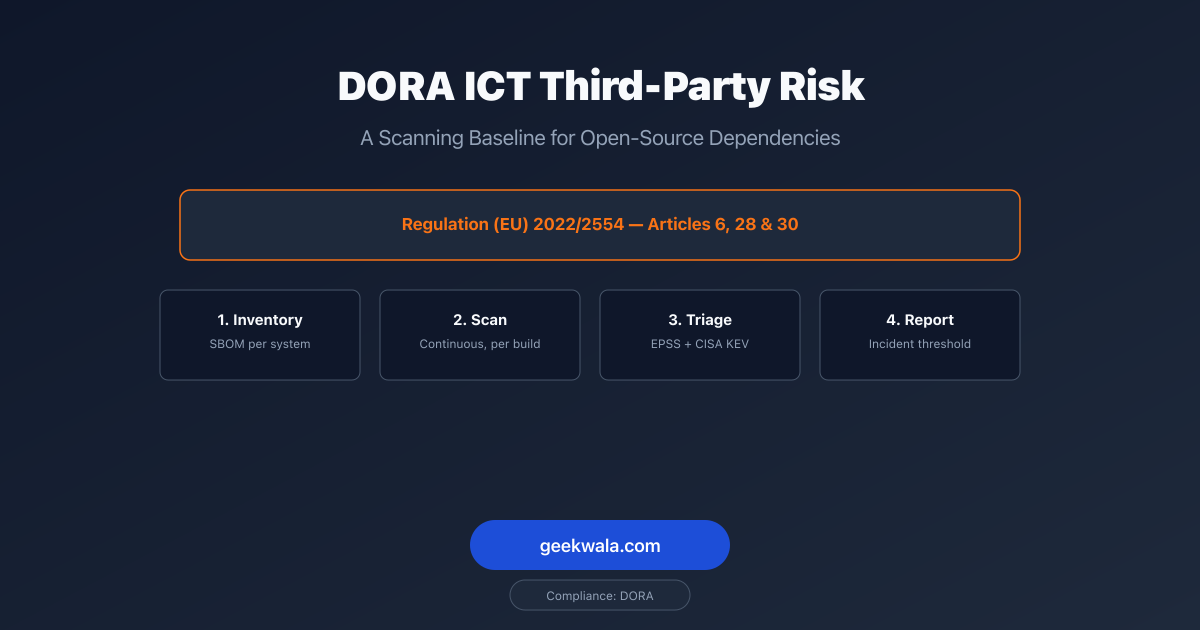
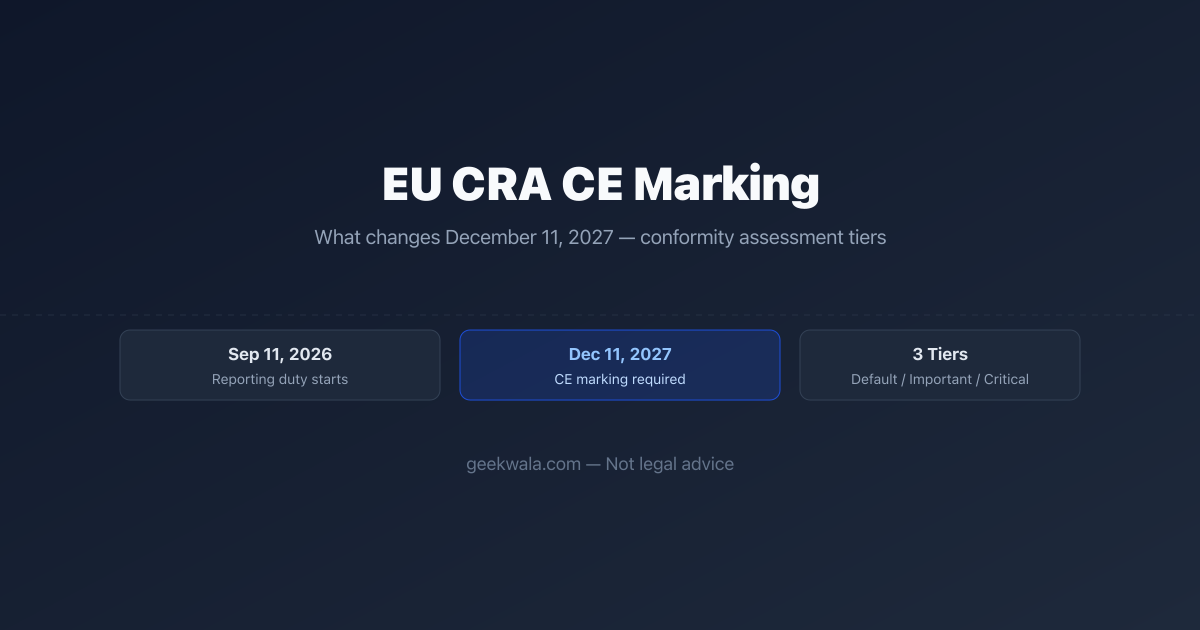
The EU Cyber Resilience Act is worth a specific distinction, because teams conflate two different clocks constantly. Article 14 sets reporting deadlines for actively exploited vulnerabilities, in force since 11 September 2026: a 24-hour early warning, a 72-hour notification, and a final report no later than 14 days after a corrective or mitigating measure is available. Annex I, Part II — the vulnerability-handling requirements Article 13 incorporates by reference — separately requires manufacturers to address and remediate vulnerabilities "without delay," a qualitative standard with no fixed remediation deadline attached, which applies from 11 December 2027. Reporting fast and remediating fast are two different obligations under two different articles. Your internal SLA is how you satisfy the spirit of Article 13; it isn't what Article 14 is measuring.
If you're a US federal contractor or watching federal mandates for signal, note that BOD 22-01 has been superseded by BOD 26-04 (issued 10 June 2026; binding on US federal civilian agencies), which sets remediation timelines from a four-factor risk matrix (KEV status, asset exposure, exploit automation potential, and technical impact) rather than KEV membership alone. A policy still keyed purely on "is it on the KEV list" is behind where federal guidance has already moved.
FAQ
What SLA should I set for transitive dependencies I can't patch directly?
The same tier the finding would get if it were a direct dependency; the SLA clock doesn't care who controls the version. What changes is the remediation path, not the timeline: you're forcing an override (npm overrides, a pip constraints file, Maven dependencyManagement) rather than bumping a manifest line yourself. See our remediation workflow for the override mechanics per ecosystem. If no override is safe and no parent update exists yet, that's exactly the accepted-risk path the policy skeleton above is built for.
Does an unreachable vulnerability still start the clock?
Yes, though it can change the tier. Reachability lowers priority; it doesn't cancel the finding, because "unreachable today" can become "reachable next release" the moment someone calls the affected function. Keep the clock running at whatever tier reachability puts it in, and re-check reachability whenever the code path changes, not just at initial triage.
How do I handle a KEV entry with no available fix?
File it under the mitigate-and-track exception immediately, the one exception a KEV finding can get, rather than letting a 72-hour clock run out silently, since there's genuinely nothing to patch. Document the mitigating controls you're relying on instead (WAF rule, feature flag disabling the vulnerable path, network segmentation) and set a short re-check interval, because KEV entries without a fix tend to get one on short notice once vendors feel the pressure.
How often should the policy itself be reviewed?
Quarterly, at minimum, and immediately after any incident where the SLA was missed or an exception was granted. Thresholds that made sense when your team had two engineers watching dependencies stop making sense at twenty, and an EPSS threshold tuned for one risk appetite can look wrong six months later once you've seen how often it actually triggers.
The Bottom Line
An SLA you miss every quarter isn't a policy. It's a quarterly apology dressed up as one. Keying on exploitation signal instead of severity alone isn't about being lenient with real risk; it's about making the strict tier small enough that your team can actually hit it every single time, which is the only version of an SLA an auditor should trust.
Scan your dependencies now → to see where your own findings actually fall across KEV and EPSS, and pair it with the remediation workflow for how a finding moves from triage to a verified fix once the clock starts.